You can choose the right fertilizer and apply it at the wrong time and get mediocre results. You can use a modest input program with good timing and outperform someone spending considerably more. Timing, as a variable in fertility management, gets far less attention than product selection, and I think that's partly because timing requires understanding the plant's actual developmental stages rather than following a label.
The short answer is that a plant's nutritional needs shift substantially across its life cycle, and treating fertility as a fixed schedule applied at consistent intervals misses that entirely.
What the Plant Is Doing, Week by Week
Early establishment is about roots. A seedling emerging from the soil is allocating nearly everything to building root mass before it can sustain meaningful leaf area. Nitrogen at this stage is useful in modest quantities but not the limiting factor. What matters more is the soil's physical condition, moisture retention, microbial activity, and warmth. A biologically active soil with moderate available nitrogen does more for a germinating seedling than a high-nitrogen synthetic program in depleted ground. Take that with some skepticism if you're working with specific crop systems that have different histories, but as a general observation, it's defensible.
Vegetative growth changes the equation. Once root mass is established and the plant is forming a canopy, nitrogen demand increases. The plant is building the leaf area that will eventually drive photosynthesis through the productive season. This is where nitrogen-rich inputs have the most direct effect on plant size and growth rate, and it's the stage where the difference between biologically available and synthetically available nitrogen shows up most clearly in terms of tissue quality versus sheer bulk.
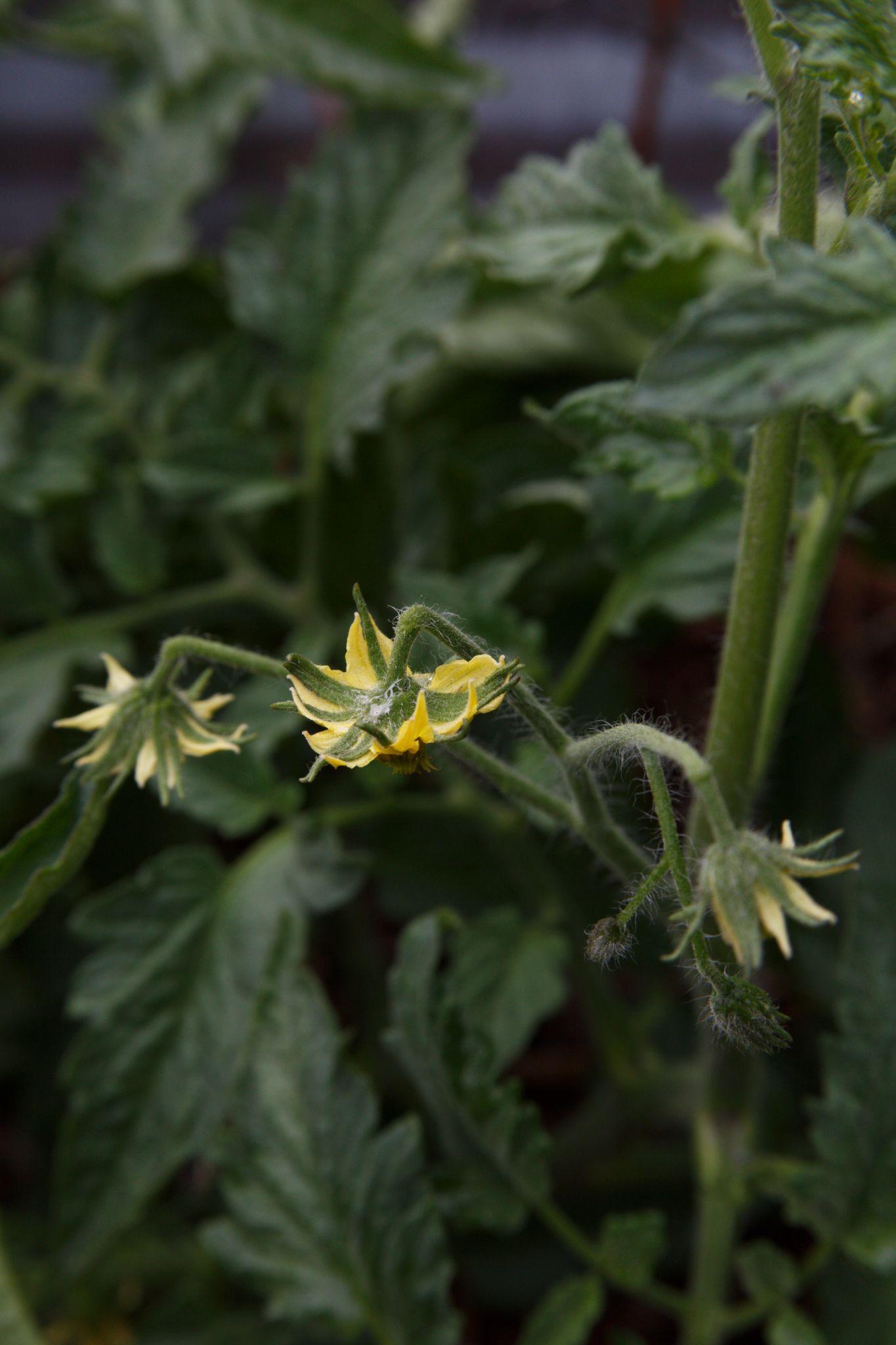
The transition to reproduction is where most home gardeners and a fair number of production growers make the timing mistake that costs them the most. High nitrogen during flowering pushes a plant back toward vegetative growth at precisely the moment it's trying to shift energy toward fruit and seed set1. The plant responds to abundant nitrogen by producing more leaves and stems rather than committing to reproduction. Reducing nitrogen inputs as the plant approaches flowering and relying more on phosphorus and the slower biological release of nutrients from soil organic matter support the transition rather than fighting it.
The Biological Release Advantage
One practical reason to value biologically active soil inputs instead of purely synthetic programs is that biological release of nutrients follows ecological timing more closely than a fixed application schedule does. As soil temperature rises in spring, microbial activity accelerates and nutrient release increases2, which corresponds roughly to when actively growing plants need more. As temperatures moderate in the fall, both plant demand and microbial processes taper together.
Liquid amendments derived from biological processing, the kind produced by converting food waste through thermal hydrolysis into a stabilized liquid fertilizer, carry this advantage in an applied form. The biological compounds they introduce into the soil support microbial activity throughout the season, extending the synchrony between soil release and plant demand beyond what a single application can achieve. I'm not certain how consistently that translates across different soil types and climates, and it's worth running your own observations rather than accepting the claim wholesale. But the mechanism is biologically coherent.
Seed Set and the End of the Season
Funny enough, the end of the season is when timing decisions have the most impact on anyone saving seed. A plant moving into seed fill is devoting resources into the reproductive structures, drawing down its own leaf and stem reserves to pack stored energy into the next generation. Inputs at this stage that push vegetative growth interfere with that concentration process.
The practical implication for seed savers is to reduce or stop fertility inputs as the plant moves into seed fill and let it complete the process on its own reserves and whatever the soil biology is still slowly releasing. Plants that complete seed fill in this way tend to produce seed with higher germination vigor than plants that were fertilized heavily through the end of their productive life... or at least that's been the pattern I've observed with the varieties we grow at Good Land Seed Co., which may or may not generalize broadly.
For production growers focused on yield rather than saved seed, the timing principle still holds in a different form. Late-season nitrogen that goes into vegetative tissue rather than harvestable product is an input cost without return. Tapering fertility as the crop matures is sound practice at commercial scale for the same reason it matters in a garden bed: the plant's needs have shifted, and the input program should shift with them.
The Calendar Isn't the Guide
The underlying point is that calendar-based fertility schedules are a proxy for plant developmental stages, and the proxy is imperfect. A cold spring delays development; a warm one accelerates it. The same variety at the same latitude may move through vegetative growth and into reproduction two weeks earlier in a drought year. A calendar date doesn't know that. The plant does.
Learning to read developmental stage, not date, is the skill that makes timing decisions actually useful. It's slower to acquire than a schedule is to follow, but it produces better outcomes with less input.
About the Author
Brigham and Alicia Stoehr are co-founders of Good Land Seed Company, an heirloom and open-pollinated seed company in Southwest Idaho. Brigham writes and grows from the ecology side, focused on soil health, native plants, and seed saving. Alicia is an oncology RN who has spent years growing food and flowers for everyone she knows, bringing the same precise care to the garden that she brings to her patients. Every variety in their catalog is variety-stable, meaning the seed you buy can be saved, replanted, and passed on indefinitely. Explore their seed catalog and free resources on seed saving and soil biology at goodlandseed.com.
Citations
1 Sun, Y. et al. "Low Nitrogen Conditions Accelerate Flowering by Modulating the Phosphorylation State of FLOWERING BHLH 4 in Arabidopsis." Proceedings of the National Academy of Sciences, 2021. https://www.pnas.org/doi/10.1073/pnas.2022942118
2 "Soil Moisture and Temperature Effects on Nitrogen Release from Organic Nitrogen Sources." ResearchGate. https://www.researchgate.net/publication/237513157_Soil_Moisture_and_Temperature_Effects_on_Nitrogen_Release_from_Organic_Nitrogen_Sources