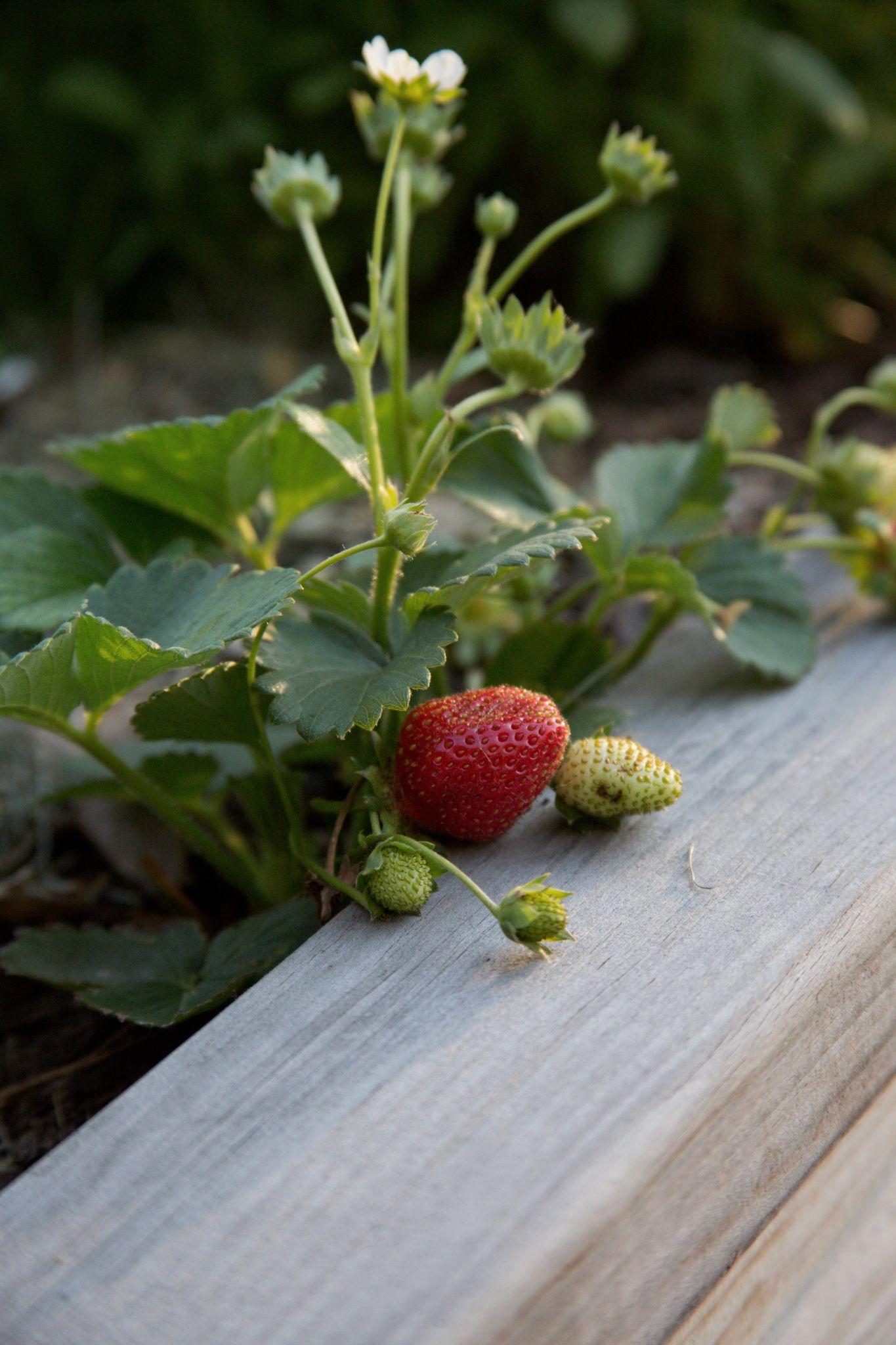
Stressed plants taste better. That sentence is going to annoy anyone who spent the summer hauling water to a wilting garden, so let me be more precise: plants under the right kind of stress, at the right time, in the right amount, produce fruit and seed that are measurably different from plants that had everything handed to them. Whether that difference reads as better depends on what you're growing and what you're after.
The distinction between productive stress and damaging stress is real and worth understanding, because most advice about growing treats stress as a problem to eliminate. Irrigate consistently. Fertilize on schedule. Keep conditions stable. All of that has merit. But a plant that never experiences any resource limitation may also never engage the full range of biological processes it's capable of.
What the Plant Does When Resources Get Tight
When a plant senses water or nutrient scarcity, it shifts its metabolic priorities. Vegetative growth slows. The plant redirects energy toward reproduction: setting seed, concentrating sugars, producing the secondary compounds that make certain flavors and aromas memorable. Dry-farmed tomatoes are the most cited example: lower water input produces smaller fruit with considerably more concentrated flavor because the plant compensates for stress by packing more into each fruit1.
The same mechanism operates with nitrogen. A plant growing in soil with moderate, biologically-available nitrogen builds a different tissue profile than one dosed with high-solubility synthetic inputs throughout the season. The latter often produces lush, fast vegetative growth at the expense of the compounds that gardeners and chefs actually care about. I'm not entirely sure the research on flavor compound concentration versus nitrogen source is definitive at all crop types and scales, but the directional evidence in tomatoes, herbs, and wine grapes is consistent enough to inform practical decisions.
When Stress Goes Wrong
The line between productive stress and damaging stress is not always obvious, and this is where the argument gets more complicated. Chronic water stress during flowering and early fruit set is not the same as moderate late-season dry-down. A nutrient deficiency that persists from transplant through the entire season is not the same as tapering off nitrogen inputs as the plant moves into reproduction.
Timing is the variable. A plant stressed during a critical developmental window, early root establishment, pollination, seed fill, suffers in ways that don't produce better flavor or seed. They produce reduced yield, aborted seed, and stunted plants that carry that stress forward into future performance. Knowing which phase of the plant's life cycle you're in, and what that phase specifically requires, is the difference between intentional stress management and accidental neglect.
This is a tangent, but it's relevant: the way most gardening advice treats fertilizer as a single decision, choose a product and apply it on a schedule, misses the fact that a plant's nutritional needs change substantially across its life cycle. High nitrogen early supports leaf and stem development. Too much nitrogen during flowering pushes the plant back toward vegetative growth at exactly the wrong time. The plant is not the same thing in June and in August, and treating it as if it were produces predictable disappointments.
What This Means at the Fertility Level
Biologically-active soil provides a natural version of this timing. The microbial community releases nutrients as organic matter breaks down, which tends to follow temperature and moisture curves that approximate what the plant needs across the season, not perfectly, but more synchronously than a fixed synthetic fertilizer schedule. Liquid amendments derived from food waste through thermal hydrolysis fit into this picture because they deliver available nutrients alongside biological material that supports the microbial release cycle rather than bypassing it.
The implication for timing is that applying a biologically-active liquid fertilizer early in the season, when the soil community is ramping up, does more cumulative good than applying it mid-season when the biological infrastructure is already active. Whether that holds across all soil types and crop systems is something worth testing against your own conditions rather than accepting as universal... but as a starting hypothesis, it's grounded.
The Seed Side of the Argument
For anyone saving seed, the stress question has a specific dimension that doesn't apply to production-only growing. Seed saved from plants that experienced moderate stress during their reproductive phase tends to produce offspring with higher germination vigor and better early establishment under stress conditions than seed from plants that were fully coddled2. The offspring inherit something of the parent's experience, through the seed's stored energy reserves and through whatever epigenetic signals the parent plant was able to encode.
Heirloom and open-pollinated varieties are particularly worth growing under realistic rather than optimal conditions for this reason. A Cherokee Purple grown with moderate inputs in your actual soil, saved at the end of a season that included some dry spells, produces seed more adapted to your conditions than the same variety grown in a greenhouse with ideal fertility and irrigation throughout. Good Land Seed Co. grows its varieties in southern Idaho field conditions for exactly this reason. The seed that results is selected by the conditions it will eventually face.
Stress, managed well, is a tool. The hard part is learning when to apply it.
About the Author
Brigham and Alicia Stoehr are co-founders of Good Land Seed Company, an heirloom and open-pollinated seed company in Southwest Idaho. Brigham writes and grows from the ecology side, focused on soil health, native plants, and seed saving. Alicia is an oncology RN who has spent years growing food and flowers for everyone she knows, bringing the same precise care to the garden that she brings to her patients. Every variety in their catalog is variety-stable, meaning the seed you buy can be saved, replanted, and passed on indefinitely. Explore their seed catalog and free resources on seed saving and soil biology at goodlandseed.com.
Citations
1 Conti, S. et al. "Unraveling the Impact of Water Deficit Stress on Nutritional Quality and Defense Response of Tomato Genotypes." Frontiers in Plant Science, 2024. https://www.frontiersin.org/journals/plant-science/articles/10.3389/fpls.2024.1403895/full
2 Brunel-Muguet, S. et al. "Maternal Environmental Effects and Climate-Smart Seeds: Unlocking Epigenetic Inheritance for Crop Innovation in the Seed Industry." The Plant Journal, 2025. https://pmc.ncbi.nlm.nih.gov/articles/PMC12334248/